Generator Maintenance and Service in Bowie, Maryland, with published regional and national price ranges up front, your loads measured on site, and one written figure before any work begins.
Generator Maintenance and Service in Bowie, MD by Bowie Generator Company
In Somerset, the best generator maintenance visit is the quiet one nobody remembers by dinner. Oil and filters changed, battery tested under load, exercise clock confirmed, and the unit left running its test cycle the way it should. We provide generator maintenance and service for Bowie homeowners who understand that a standby system is a machine that waits, and that waiting machines fail quietly unless someone looks after them on schedule.
Most generator failures at a real outage were not sudden. They were building for months in a weakening battery, oil that had gone too long, a filter loading up, or an intake partly blocked by yard debris. The exercise run starts the engine, but it inspects nothing, and it runs without the load of the house. Maintenance is the human check that catches what the self test cannot, while the fix is still small.
What a Maintenance Visit Covers
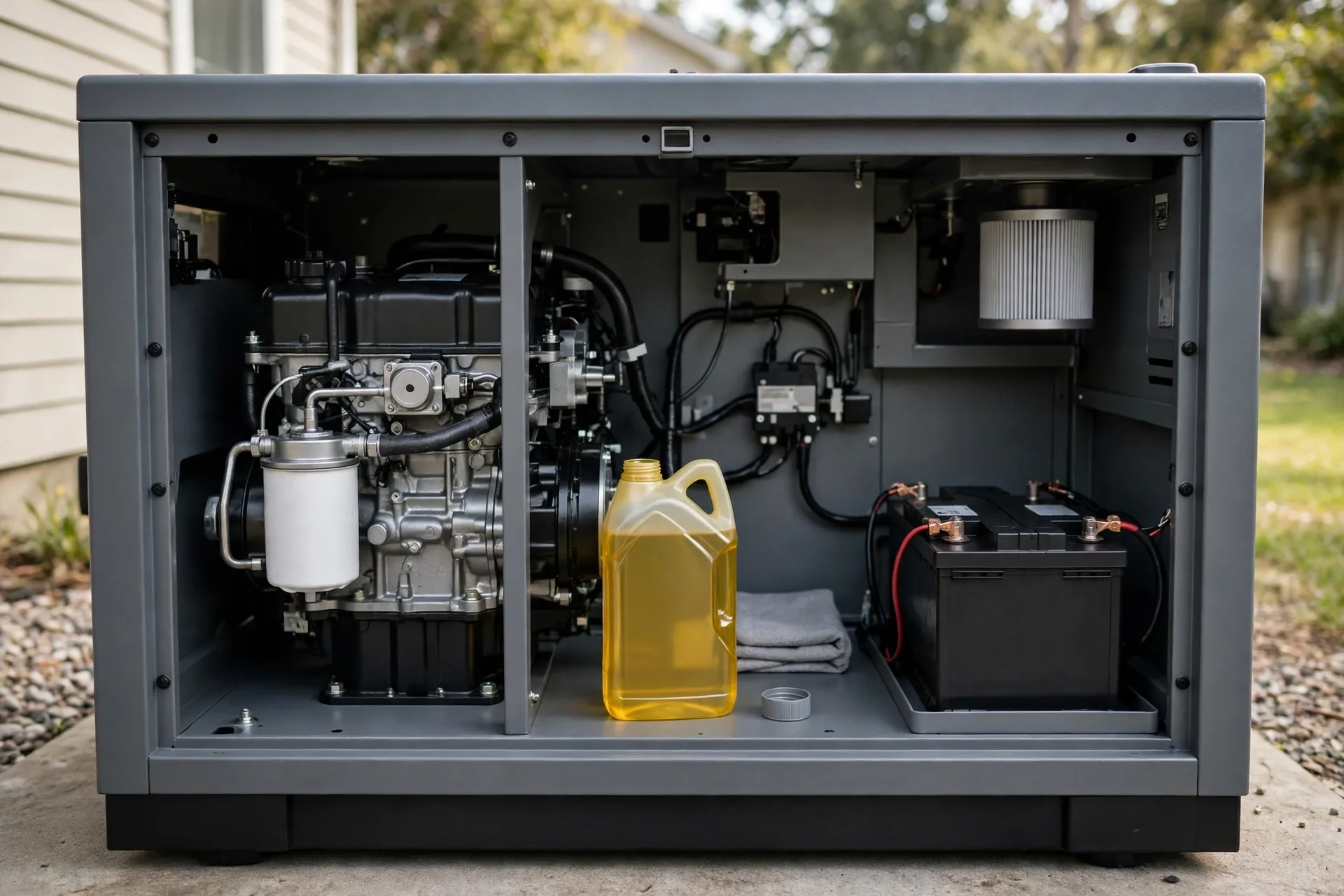
A maintenance visit starts with the engine service the manufacturer schedule calls for at that interval, centered on oil and oil filter changes and an air filter inspection or replacement. Oil is the life of a small engine that may sit for weeks and then be asked to run for a day straight, and old oil ages by time as much as by run hours. We also check spark plugs where the engine design calls for them, inspect belts and hoses on units that use them, and look over fuel connections for leaks or wear.
The electrical side gets equal attention. We test the battery under load, because a battery that reads well at rest can still fail the cranking demand, and we clean and check its connections. We confirm the exercise cycle is set and running on schedule, check any fault history the control panel holds, and confirm the transfer equipment is ready to hand the house over and back. Coolant is checked on liquid cooled units, while air cooled units get a careful clearing of intake and cooling paths.
The visit closes with a run. We start the unit, listen to it settle, and where the visit calls for it, run it under load so the proof is the house itself. We leave you with a plain summary of what was done and anything that will need attention before the next interval. Nothing is replaced without the finding being explained first.
How Often Standby Generators Need Service
A standby generator needs service on a regular annual rhythm for most Bowie homes, with the exact interval guided by the manufacturer schedule for your unit, its run hours, and how hard recent outage seasons have worked it. A unit that carried the house through several long outages in a storm heavy year has earned an earlier look than a unit that mostly exercised. The panel history helps us judge that with you.
Between visits, the exercise cycle does the weekly work. It starts the engine, circulates oil, and keeps the battery charged, and it also acts as an early warning system. If the unit skips an exercise, runs rough, or leaves a fault light, that is information, and it is best acted on while it is still a small finding. Homeowners can help by keeping the area around the unit clear of leaves and stored items, and by noting any new sound or light.
Seasonal timing is worth planning around. In Bowie, the heaviest outage risk arrives with summer thunderstorms and hurricane remnants, followed by winter ice, and a visit ahead of summer puts fresh oil and a tested battery in place before the hardest season.
Recent Project: Generator Maintenance and Service in Somerset
BEFOREAFTER
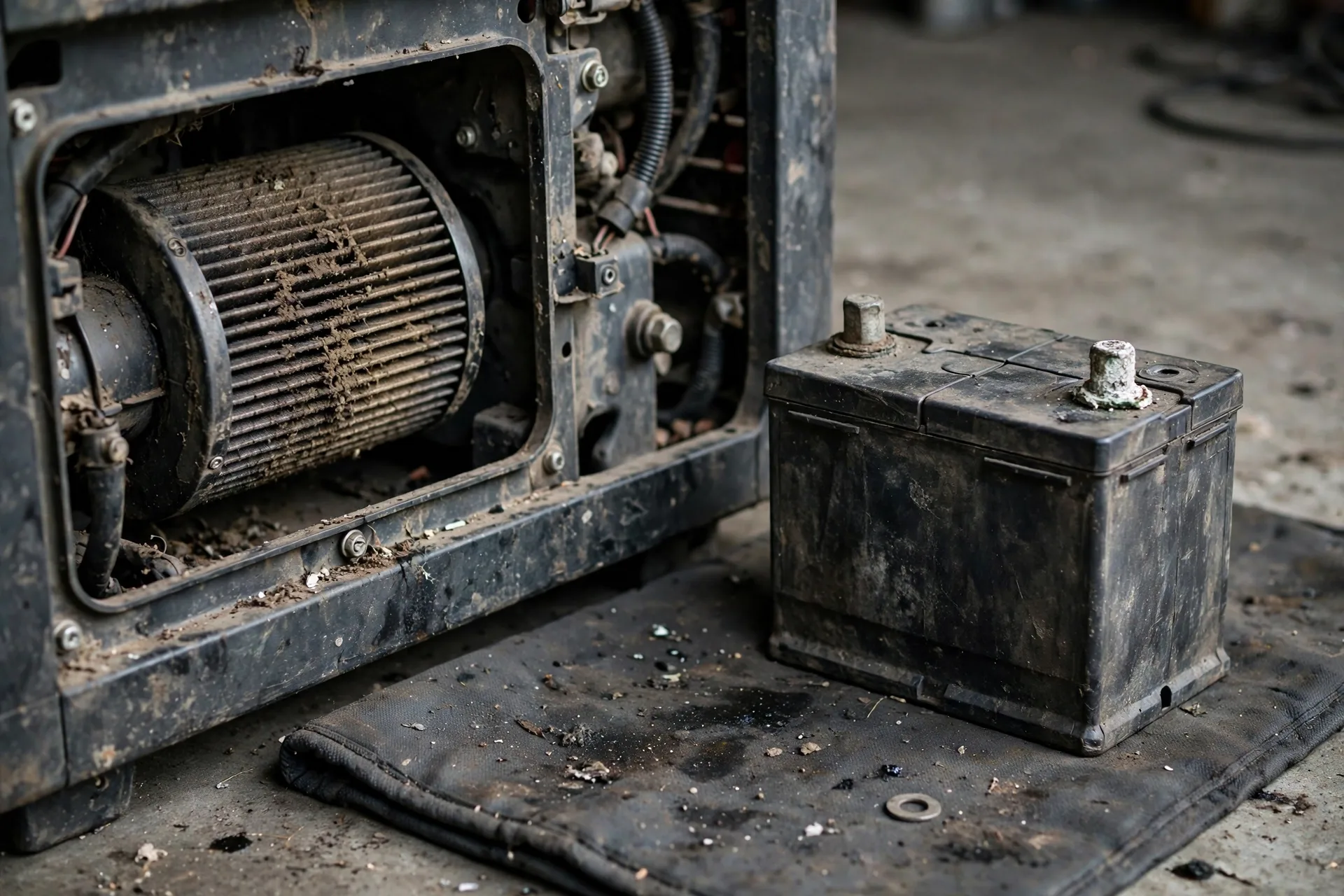
A Somerset home had a standby unit that had gone two full seasons without service and had begun cranking slowly during its exercise run. The visit covered oil and filter service, air filter replacement, and a battery that tested weak under load and was replaced with the owner approval at the visit. The exercise clock was reset to a daytime schedule and the system was run under house load to prove the start was clean again.
Turnaround
One visit, about two hours on site.
Final Price
$395
Generator Maintenance and Service Cost in Bowie, MD
No Bowie company publishes a full local price list, so the figures here are published regional and national figures, labeled as such, to help you plan. Published figures put annual maintenance at $295 to $495 for a residential standby unit, covering the scheduled service visit itself. Where a home lands inside that range depends on the size and type of the unit, since a larger liquid cooled system carries more service points than a compact air cooled one.
What moves the figure beyond the visit itself is condition, and condition is stated openly at the visit. A battery that tests weak, plugs or filters beyond their interval, or a repair finding turned up during inspection adds parts and time that a routine visit on a healthy unit does not. We explain any added item and its reason before that work is folded in, so the service figure never grows silently. Routine upkeep is the smallest figure in standby ownership, and it keeps the larger investment ready to perform.
Why Maintenance Matters More in Bowie Than the Manual Suggests
A manual is written for an average climate and an average outage pattern. Bowie asks more of a standby unit in specific ways. Summer humidity and storm season workload mean long runs in high heat, exactly the condition that punishes old oil and a marginal battery. Winter ice outages ask the unit to start cold and run long while the house depends on heat. Pollen, leaves, and yard growth through a Maryland growing season find their way into intakes faster than many owners expect.
The housing pattern adds a second reason. Bowie is a city of long term owners, with 83.9 percent homeownership, which means many generators here age in place alongside the house. Woodmore and Fairwood units carry larger homes where a failed start leaves more at stake, from finished basements with sump pumps to home offices. A yearly visit also creates a record of what was changed and tested, which makes a future repair diagnosis sharper.
How much does annual generator maintenance cost in Bowie, MD?
Published regional and national figures put annual maintenance at $295 to $495 for a residential standby unit. Unit size and type set your place inside that range, and items found at the visit, such as a weak battery, are explained before any added work is included. The published range covers the scheduled service visit itself.
How often should my standby generator be serviced?
Most residential standby units need service on an annual rhythm, guided by the manufacturer schedule, the run hours, and how much outage work the unit has done since the last visit. A storm heavy year can justify an earlier visit.
What happens if I skip maintenance for a few years?
The risks build quietly: oil ages, filters load up, and a battery weakens until a start fails, often during the outage the unit exists for. Skipped service also means small findings, such as a blocked intake, go unseen while they are still small. A catch up visit restores the schedule.
Does the weekly exercise run replace a service visit?
No. The exercise run starts the engine and keeps oil moving and the battery charged, but it inspects nothing and usually runs without the load of the house. A service visit checks oil, filters, battery strength under load, fuel connections, and controls, and proves the system under real load. The two work together, and neither does the job of the other.
Will you service a generator another company installed?
Yes. Maintenance starts from the unit in front of us, its manufacturer schedule, its run history, and its current condition. Tell us the make and size if you know them and when it was last serviced, and we will build the visit around your system.
What can I do between service visits?
Keep the area around the unit clear of leaves, stored items, and mulch piled against the cabinet, and leave room for air flow. Watch for a missed exercise, a new fault light, or a slower crank, and note when you first saw it.
Get Your Generator Quote
Tell us about your home and what needs to stay on when the power goes out. We read every request that comes in and respond with the published range for that kind of work and the next step, starting with a visit to measure your load, fuel, and placement.
Prefer to talk it through first? Send the form and we will call you back at the number you give us.